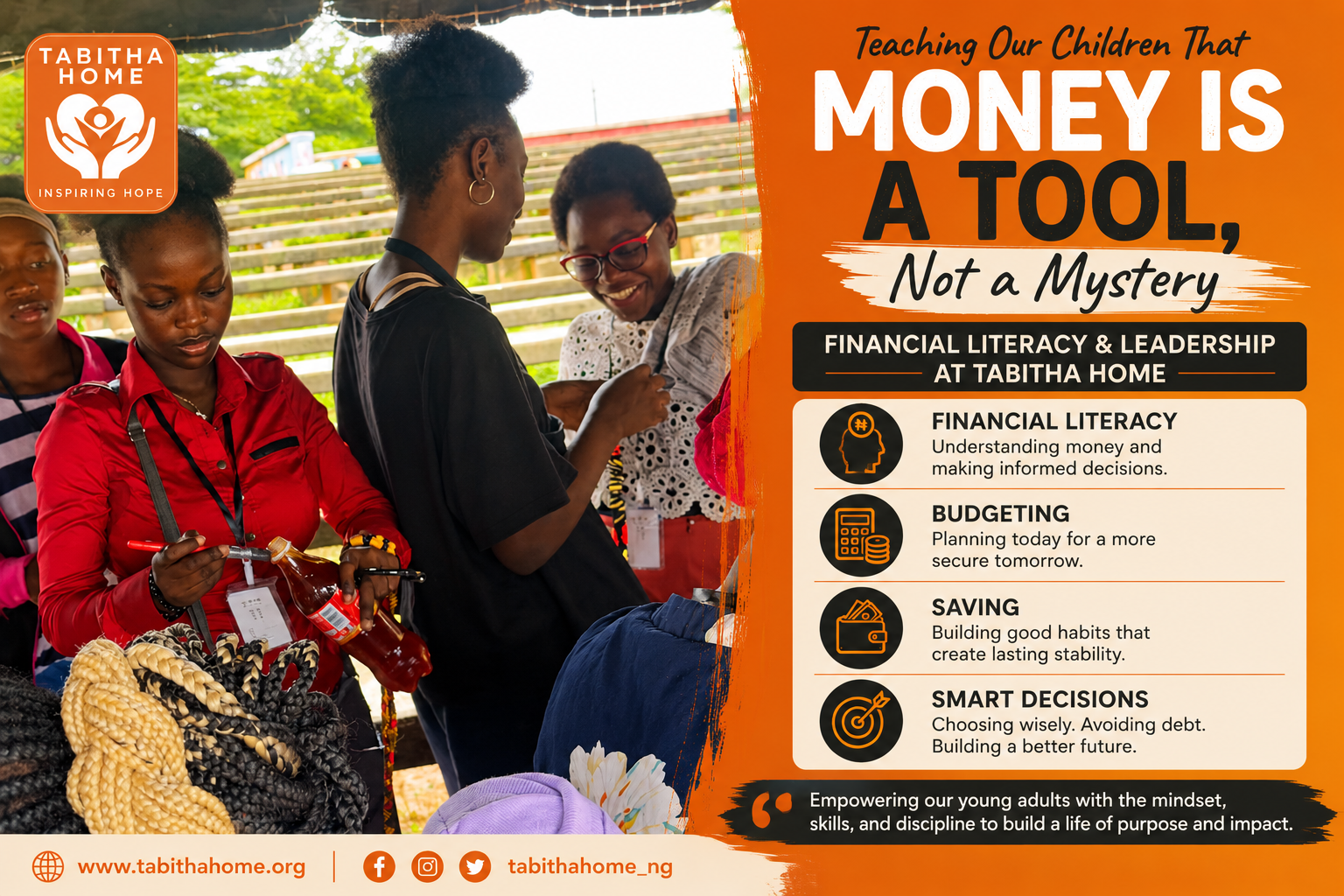
A group of our university students sat down for a training session that had nothing to do with their academic subjects. No equations, no essays, no exam preparation. The topic was money, and specifically, how to think about it, talk about it, and manage it well.
The financial literacy and leadership training was designed for the young adults among our beneficiaries who are currently studying at university. These are young people on the edge of real independence, teenagers and early twenties who will soon be navigating salaries, rent, groceries, and the dozens of small and large financial decisions that adult life requires every single day.
We brought them together because we had noticed something. Many young people, and this is not unique to children in care, reach adulthood with strong academic knowledge but very little practical understanding of how to handle money. They know how to pass examinations. They do not always know how to save, how to avoid debt traps, or how to think long-term about financial decisions when short-term pressures are pressing in from every side.
The session covered the mindset of money, which sounds abstract but is actually very practical. It is the difference between seeing money as something that runs out and something that can be managed. It is understanding that how you think about what you earn shapes what you do with it, long before the spending decisions happen. The facilitator walked the students through the psychology of financial decisions, the habits that lead to stability, and the simple systems that make saving possible even on a small income.
There were practical exercises. There were honest conversations. There were questions that revealed how much uncertainty these young people carried about money, not because they were careless, but because nobody had ever sat with them and explained it plainly.
One of the things we care about deeply at Tabitha Home is preparing our children not just for the years they spend with us, but for the decades that come after. Academic qualifications matter enormously, and we invest heavily in the educational journeys of all our children. But qualifications alone do not guarantee a stable adult life. A young person who earns their first salary and has no framework for managing it can find themselves in difficulty very quickly.
Financial discipline, started early, changes trajectories. It is the difference between a young adult who finishes university and immediately begins building something, and one who finishes university and spends years trying to catch up.
We want our children to be builders. The financial literacy training was one step in that direction, and we plan to continue offering this kind of practical preparation as our young adults move closer to independence.
If you believe in this work, visit www.tabithahome.org to find out how you can be part of it.